
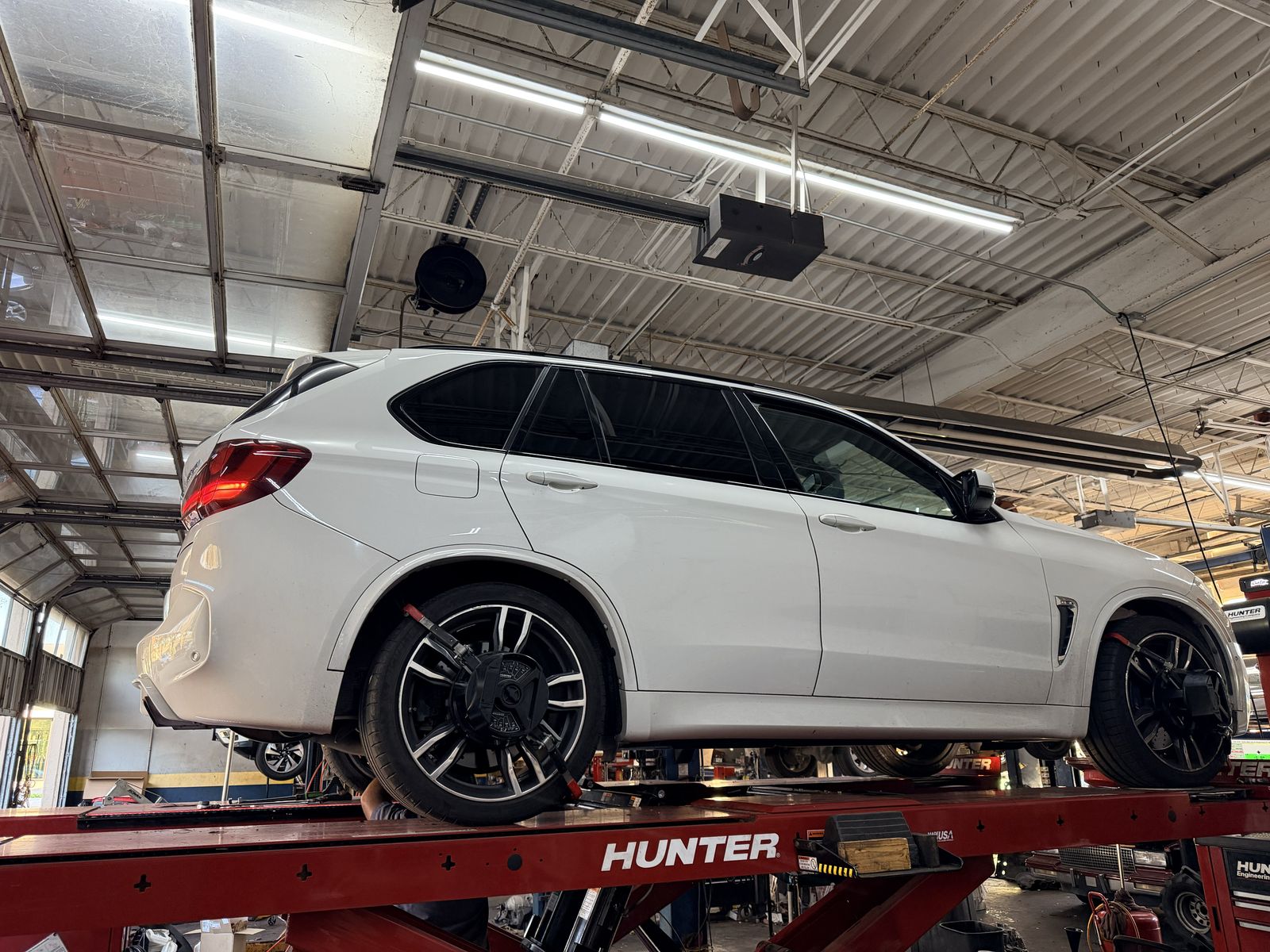
An alignment does not straighten anything. It sets three angles at each wheel so the tires roll flat, track straight, and return to center after a turn. Get them wrong and you burn through a set of tires in 15,000 miles and fight the wheel on every straight.
The three angles
Toe is whether the tires point slightly in or out, viewed from above. It is the angle that wears tires fastest. Camber is the tilt of the tire, viewed from the front; too much negative camber wears the inside edge. Caster is the steering-axis angle that gives you straight-line stability and self-centering.
When you need one
After new tires, after any suspension or steering part is replaced, after a hard pothole or curb strike (Cartwright Road has a few), or whenever the car pulls, the wheel is off-center, or the tires show edge wear. Annually is reasonable on Houston roads.
Why the equipment matters
We align on a Hunter system with camera targets on all four wheels. It measures to a hundredth of a degree, compares to the factory specification for your exact model and ride height, and prints a before-and-after sheet you keep. If a part is worn enough that the angle will not hold, the rack tells us — and we tell you before adjusting.
What it costs versus what it saves
A four-wheel alignment is a fraction of a set of performance tires. On a Cayenne or an X5 with staggered 21-inch wheels, that math is not close.
Questions about your car?
Call (281) 261-0400 or text (713) 364-2881. 1653 Cartwright Rd, Missouri City — Quail Valley Shopping Center.
Keep reading

Peak Hurricane Season in Houston: The Car Checklist That Actually Matters
Mid-September is the peak of Gulf hurricane season. Battery, tires, wipers, cooling and a full tank — what to check now so your car is ready if you have to leave in a hurry.
Read more →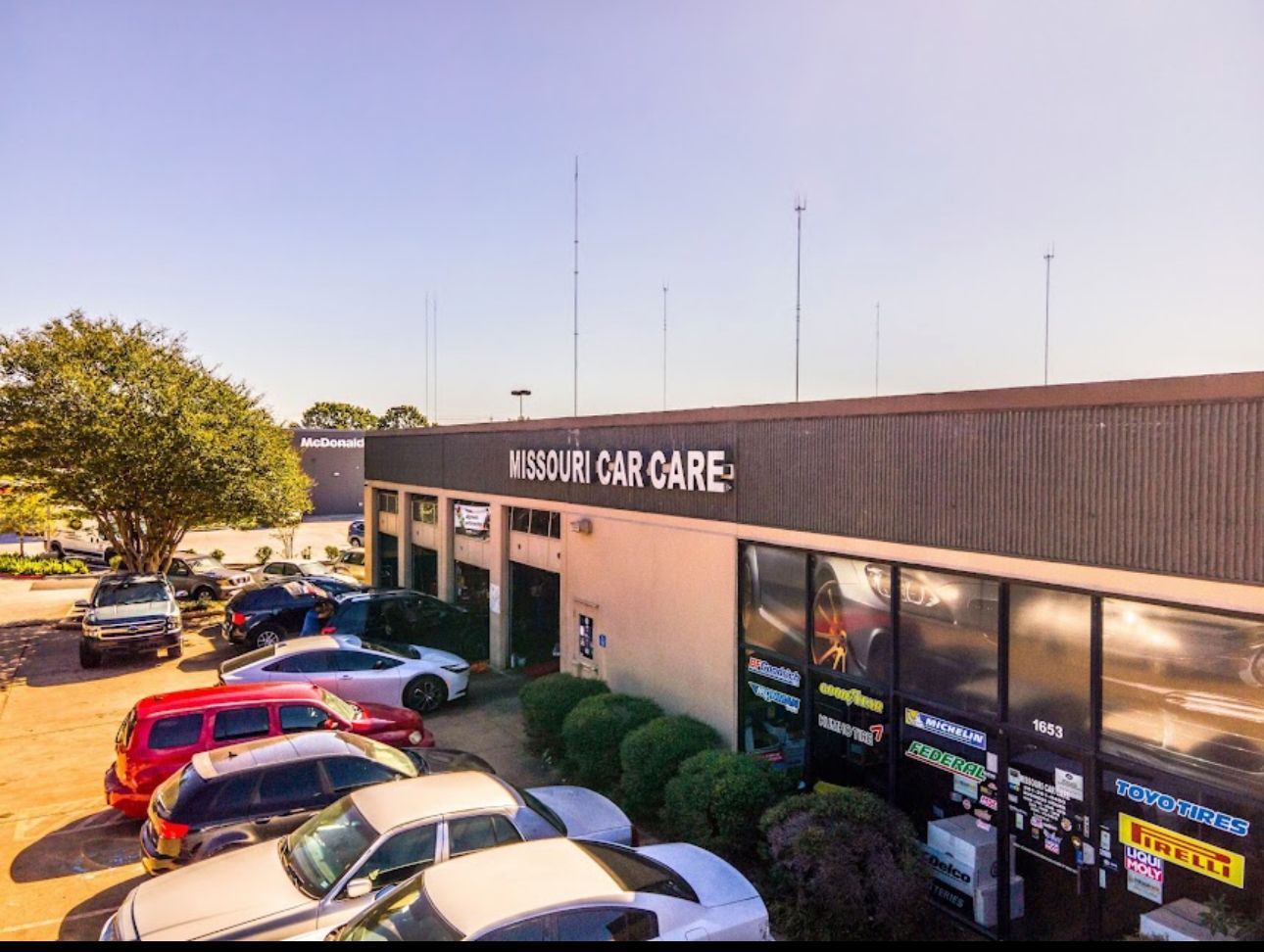
Auto Repair in Missouri City, TX: How to Choose a Shop, and What Good Work Should Cost
There are more than a dozen auto shops within ten minutes of Quail Valley. Here is how to tell them apart, what a fair estimate looks like, and the questions worth asking before you hand over the keys.
Read more →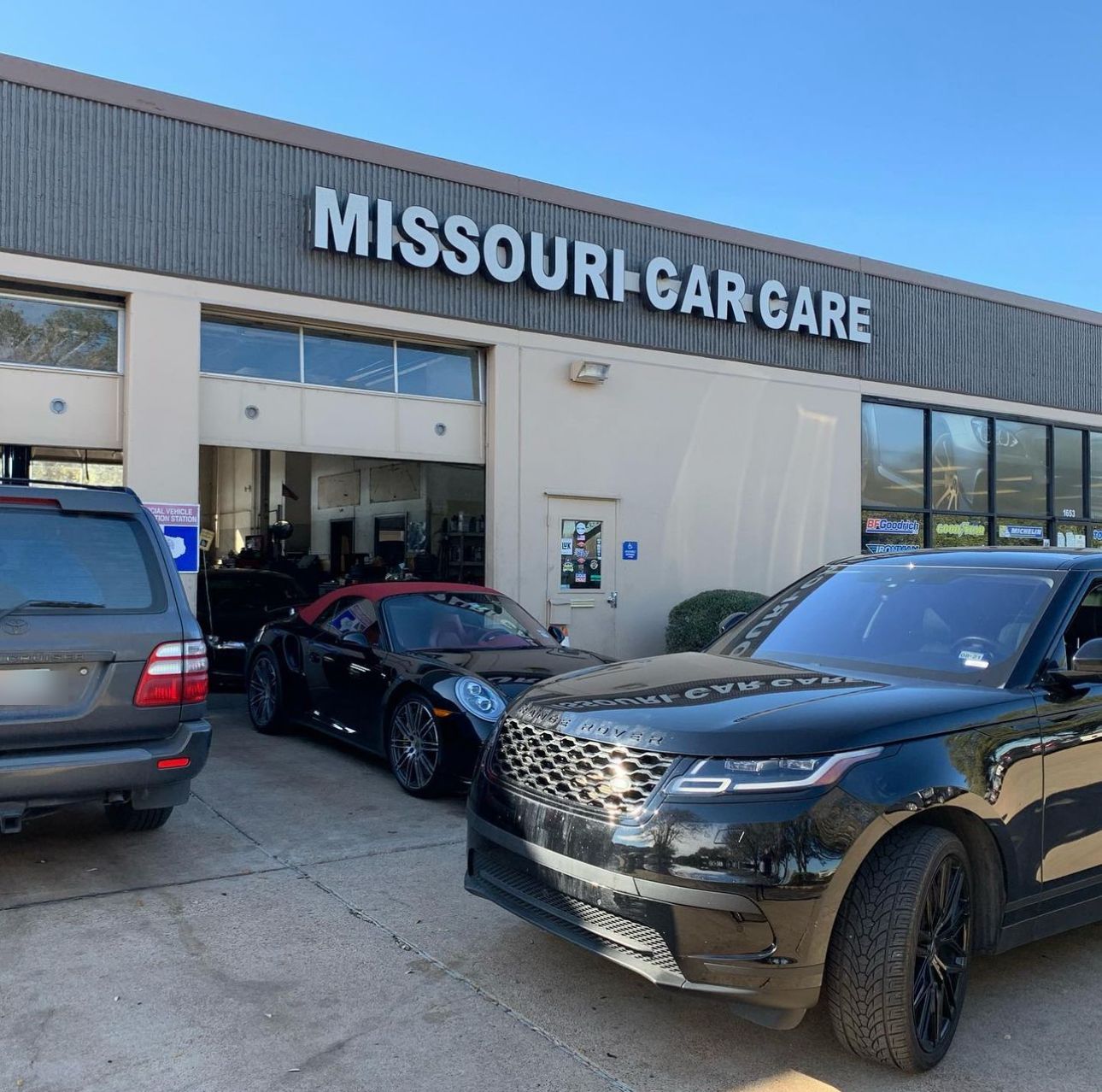
Auto Repair Near Sienna and Riverstone: Where 77459 Actually Gets Its Cars Worked On
Sienna and Riverstone have plenty of oil-change bays and almost no full-service shops. Here is what is close, what is worth the ten-minute drive, and how to handle a breakdown on Sienna Parkway.
Read more →